Bleeding Gums? What a Deep Cleaning (Scaling and Root Planing) Does and When You Need One

Quick answer
Gums that bleed when you brush or floss are often an early sign of gum inflammation. If buildup has spread below the gumline and created deeper pockets around the teeth, a dentist may recommend scaling and root planing, a non-surgical deep cleaning that removes plaque and tartar from the tooth roots so the gums can heal.
Key takeaways
- Bleeding gums are often an early sign of gum inflammation (gingivitis).
- Gum disease that reaches below the gumline can form deeper pockets around the teeth.
- Scaling and root planing (SRP) cleans below the gumline and smooths the root surfaces.
- Follow-up care and more frequent maintenance visits help keep gum disease under control.
- Our team, including a board-certified periodontist, treats gum disease at our Miracle Mile office.
A little pink in the sink after brushing is easy to dismiss, but bleeding gums are one of the most common early signs of gum disease. Healthy gums generally do not bleed with normal brushing and flossing. At Solace Dentistry in Los Angeles, Dr. Sahar Moeini and our team evaluate gum health at every checkup and provide treatment, including deep cleaning, when gum disease is present.
Why do gums bleed?
The most common reason is inflammation caused by plaque, the sticky film of bacteria that forms on teeth. When plaque is not fully removed, the gums can become red, swollen, and prone to bleeding. Over time plaque can harden into tartar (calculus), which brushing and flossing cannot remove.
Other factors can also play a role, including brushing too hard, hormonal changes, certain medications, and some medical conditions. If your gums bleed regularly, it is worth having them checked rather than brushing less.
Gingivitis vs. periodontitis: what is the difference?
- Gingivitis is inflammation of the gums. It is often reversible with professional cleaning and better daily home care.
- Periodontitis is a more advanced stage in which infection and inflammation affect the tissues and bone that support the teeth. Pockets can form between the gums and teeth, and without treatment the supporting bone can be lost. Periodontitis is typically managed and kept under control rather than simply cured.
How does a dentist check for gum disease?
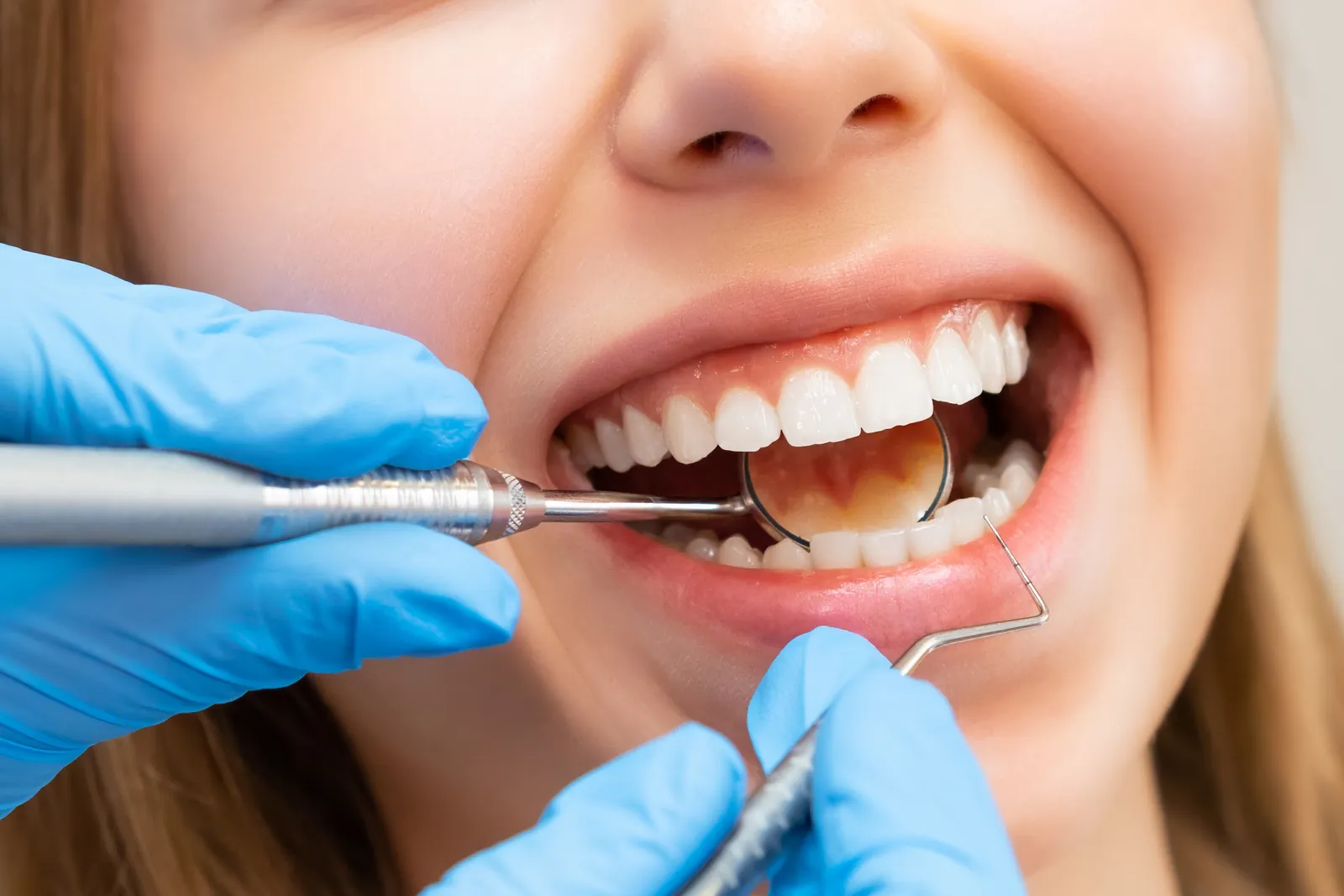
During an exam, a small measuring instrument called a periodontal probe is used to measure the space between each tooth and the gum. Shallow measurements are generally a sign of healthy attachment, while deeper pockets can indicate gum disease. Bleeding when the gums are measured, gum recession, and changes on digital X-rays also help show what is happening below the surface.
What is the difference between a regular cleaning and a deep cleaning?
| Regular cleaning | Deep cleaning (scaling and root planing) | |
|---|---|---|
| Purpose | Preventive care for healthy gums | Treatment for gum disease |
| Where it cleans | Teeth surfaces, mainly above the gumline | Below the gumline and along the tooth roots |
| Root smoothing | No | Yes, to support gum healing |
| Anesthesia | Usually not needed | Local anesthesia is often used for comfort |
| Visits | Usually one | One or several, depending on how many areas need treatment |
A professional dental cleaning is designed to keep healthy gums healthy. When gum disease has created deeper pockets and buildup below the gumline, a standard cleaning cannot reach it adequately, which is when scaling and root planing may be recommended.
What happens during scaling and root planing?
- Comfort first. Local anesthesia may be used to numb the areas being treated.
- Scaling. Plaque and tartar are removed from above and below the gumline.
- Root planing. The root surfaces are cleaned and smoothed, which helps the gums heal and reattach more closely to the teeth.
- Home-care plan. You receive personalized instructions for brushing, flossing, and any recommended products.
What should you expect after a deep cleaning?
Some temporary gum tenderness or tooth sensitivity is common and typically improves as the gums heal. A follow-up periodontal evaluation shows how your gums responded. Many patients with a history of gum disease benefit from periodontal maintenance cleanings on a schedule set for their needs, which may be more often than twice a year.
What if gum disease is more advanced?
Some cases need more than a deep cleaning. Depending on your needs, treatment may include osseous surgery to reduce deep pockets or gum grafting for recession. Our team includes Dr. Fabrizio Dall’Olmo, a board-certified periodontist, so advanced gum care can be coordinated within the same practice.
How can you keep your gums healthy?
- Brush twice a day with a soft-bristled brush and gentle technique
- Clean between your teeth every day with floss or another interdental cleaner
- Keep up with regular checkups and cleanings
- Avoid tobacco, which is strongly associated with gum disease
- Tell your dentist about changes in your health or medications
Gum disease treatment near Miracle Mile
Solace Dentistry is located at 5757 Wilshire Blvd, Suite 660, in SAG-AFTRA Plaza in the Miracle Mile area of Los Angeles, near the La Brea Tar Pits and Museum. We welcome patients from Miracle Mile, West Hollywood, Koreatown, Downtown Los Angeles, and surrounding communities. If your gums bleed, feel tender, or look swollen, call (323) 930-2386 or book online for a periodontal evaluation.
Frequently asked questions
Is a deep cleaning really necessary?
It is recommended when gum disease has created deeper pockets and buildup below the gumline that a regular cleaning cannot adequately reach. Your gum measurements and X-rays help determine whether you need it.
Does scaling and root planing hurt?
Local anesthesia is often used to keep you comfortable during treatment. Some temporary tenderness or sensitivity afterward is common and usually improves as the gums heal.
Can gum disease be reversed?
Gingivitis is often reversible with professional cleaning and good home care. Periodontitis is generally managed and kept under control with treatment and ongoing maintenance.
How often will I need cleanings after a deep cleaning?
It depends on your gum health. Many patients with a history of gum disease benefit from periodontal maintenance visits more often than twice a year. Your dentist will recommend a schedule.
Does insurance cover a deep cleaning?
Many dental plans include benefits for periodontal treatment, but coverage varies. Our team can verify your benefits before treatment and discuss payment options, including CareCredit.
This article is general information, not a diagnosis or a substitute for an examination. For advice about your own teeth, gums, jaw, or sleep, schedule a visit with Solace Dentistry at 5757 Wilshire Blvd, Suite 660, Los Angeles, CA 90036, or call (323) 930-2386.